
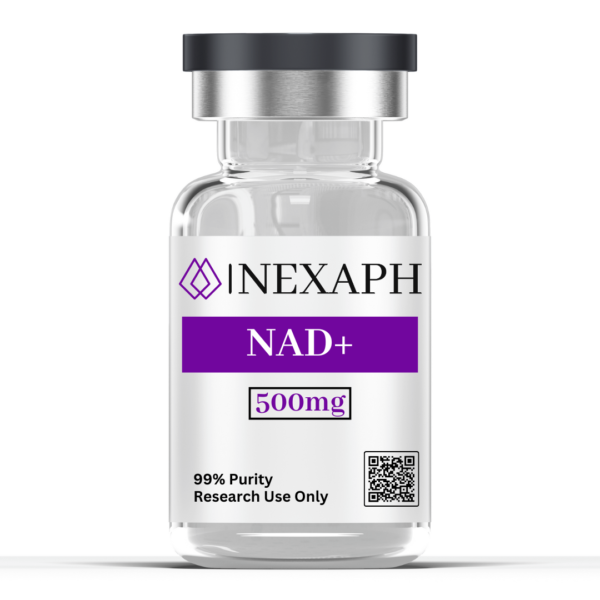
NAD+ 500mg Buffered (10 vials/kit): Essential Cellular Coenzyme for Advanced Bioenergetic Research
A frequent challenge encountered when working with standard commercial NAD+ free acid powder is its pronounced chemical acidity. Unbuffered NAD+ free acid yields a strongly acidic solution (pH 2.0 to 3.0) upon reconstitution in unbuffered diluents. When introduced to sensitive cell culture media or isolated enzyme assays, this severe local pH drop can induce immediate acid-induced protein denaturation, cell membrane rupture, or premature enzymatic inactivation. The NAD+ 500mg Buffered (10 vials/kit) formulation directly eliminates this experimental variable by integrating an analytical-grade sodium buffering matrix during the specialized lyophilization process. Upon reconstitution, NAD+ 500mg Buffered (10 vials/kit) dissolves cleanly into a physiologically neutral pH range (pH 6.5 to 7.2), protecting delicate cellular target systems and ensuring consistent biological baseline conditions.
Packaging configuration is vital for preserving delicate dinucleotide molecules over long-term research schedules. Uncomplexed NAD+ in liquid solution degrades rapidly through nucleophilic hydrolysis, converting into nicotinamide and ADP-ribose over short timeframes when exposed to heat or light. The NAD+ 500mg Buffered (10 vials/kit) packaging architecture resolves this stability bottleneck by providing 5,000mg (5 grams) of total active compound divided across ten separate 500mg USP Type I borosilicate glass vials. Freeze-dried under precise sterile vacuum conditions, each vial contains a highly stable, white lyophilized cake. This multi-vial format enables researchers to reconstitute single 500mg working aliquots as needed, keeping the remaining unactivated stock in complete molecular stasis under frozen storage and eliminating the concentration loss associated with repeated freeze-thaw cycles.
Biochemical Pathways, Sirtuin Activation, and Quality Standards of NAD+ 500mg Buffered (10 vials/kit)
The scientific interest in NAD+ 500mg Buffered (10 vials/kit) spans across multiple biochemical disciplines, ranging from metabolic regulation and DNA repair mechanisms to neurobiology and cellular longevity research. At the cellular level, NAD+ acts as an essential co-substrate for three primary classes of regulatory enzymes that govern genomic stability and adaptive stress responses:
-
Sirtuin Deacetylase Recruitment (SIRT1–SIRT7): NAD+ serves as an obligatory cleavage substrate for class III histone deacetylases. Sirtuins consume NAD+ to strip acetyl groups from nuclear histones and non-histone proteins, regulating epigenetic chromatin structure, activating PGC-1alpha for mitochondrial biogenesis, and driving transcription pathways associated with cellular longevity.
-
PARP-Mediated DNA Damage Repair: Poly(ADP-ribose) polymerases, particularly PARP1 and PARP2, rely on intracellular NAD+ to synthesize PAR polymers at sites of single- and double-strand DNA breaks, recruiting downstream enzymatic repair machinery to maintain genomic stability.
-
Mitochondrial Electron Transport Chain (ETC): In metabolic bioenergetics, NAD+ accepts high-energy electrons during glycolysis and the Krebs cycle to form NADH. NADH subsequently donates electrons to Complex I (NADH:ubiquinone oxidoreductase) in the inner mitochondrial membrane, driving the proton gradient required for ATP synthesis via ATP synthase.
-
Ectoenzyme Calcium Signaling (CD38/CD157): Serves as the biochemical precursor for cyclic ADP-ribose (cADPR) and NAADP generation, crucial secondary messengers that modulate intracellular calcium ion flux and immune cell activation.
-
pH-Neutralized Matrix Stability: Incorporates a built-in sodium buffer that preserves a near-neutral pH (6.5–7.2) upon reconstitution, preventing acid shock in cell culture media and ensuring long-term enzyme kinetic accuracy.
| Biochemical / Analytical Parameter | Technical Profile for NAD+ 500mg Buffered (10 vials/kit) |
| Product Identifier | NAD+ 500mg Buffered (10 vials/kit) |
| Chemical Name | β-Nicotinamide Adenine Dinucleotide (Oxidized Form, Sodium Salt Buffered) |
| CAS Registry Number | 53-84-9 (Free Acid) / 20111-18-6 (Sodium Salt) |
| Molecular Formula | C₂₁H₂₇N⇇O₁₄P₂ |
| Molecular Mass | Approximately 663.43 g/mol |
| Chemical Purity | ≥99.0% (Verified via high-resolution analytical HPLC) |
| Physical Form | White to off-white, sterile lyophilized powder/cake |
| Reconstituted Solution pH | Neutral pH 6.5 – 7.2 (Buffered system) |
| Kit Configuration | 10 USP Type I Glass Vials per Kit (500mg NAD+ per vial; 5g total) |
| Primary Research Domains | Cellular bioenergetics, Sirtuin deacetylase kinetics, PARP repair assays, metabolic regulation |
Every production run of NAD+ 500mg Buffered (10 vials/kit) undergoes stringent analytical refinement. Utilizing automated Solid-Phase Synthesis and multi-stage crystallization followed by preparative High-Performance Liquid Chromatography (HPLC), each batch is verified to meet or exceed a strictly enforced chemical purity standard of ≥99.0%. Electrospray Ionization Mass Spectrometry (ESI-MS) confirms exact molecular weight matching. This extreme level of purity guarantees the absence of free nicotinamide impurities, residual organic solvents, heavy metals, or bacterial endotoxins that could skew observational data in delicate cell-culture experiments.
Reconstitution Protocols, Storage Specifications, and Quality Assurance for NAD+ 500mg Buffered (10 vials/kit)
Achieving accurate, publication-quality experimental data when utilizing NAD+ 500mg Buffered (10 vials/kit) requires strict adherence to standardized aseptic reconstitution and climate-controlled storage protocols. Dinucleotides possess delicate glycosidic bonds that can undergo thermal hydrolysis or light-induced oxidation if exposed to adverse laboratory conditions. The following standard operating procedures outline the optimal methodology for preparing and preserving NAD+ 500mg Buffered (10 vials/kit) in laboratory environments.
All reconstitution steps should be executed under a certified Class II Biosafety Cabinet or laminar flow hood. Before introducing solvents, allow cold vials of NAD+ 500mg Buffered (10 vials/kit) to equilibrate to ambient room temperature to prevent atmospheric humidity from condensing on the lyophilized cake.
-
Aseptic Septum Preparation: Remove the protective flip-off plastic cap from the NAD+ 500mg Buffered (10 vials/kit) vial. Thoroughly wipe the synthetic rubber stopper with a sterile 70% isopropyl alcohol swab and allow it to air-dry completely.
-
Diluent Introduction: Using a sterile laboratory syringe equipped with a fine-gauge needle, draw the calculated volume of Bacteriostatic Water (0.9% benzyl alcohol), Sterile Normal Saline (0.9% NaCl), or Phosphate-Buffered Saline (PBS). Gently insert the needle through the center of the stopper at a 45-degree angle and slowly direct the liquid stream down the inner glass wall of the vial. Do not spray diluent directly onto the powder cake.
-
Gentle Dissolution: Allow the solvent to naturally permeate the freeze-dried matrix. Gently swirl or roll the vial between your palms until the solution becomes completely clear and colorless. Never vortex or shake violently, as high shear forces can introduce micro-bubbles and promote mechanical degradation.
-
Aliquot Distribution: For protocols requiring multiple testing intervals over several days or weeks, divide the reconstituted NAD+ 500mg Buffered (10 vials/kit) liquid into small, sterile, light-protected microcentrifuge tubes under aseptic conditions. Store liquid aliquots frozen to minimize headspace oxidation and avoid repeated freeze-thaw cycles.
| Operational Phase | Recommended Storage & Environmental Condition | Expected Stability Duration |
| Unopened Lyophilized Kit | Deep Freeze at -20°C to -80°C (Protected from light and moisture) | 24 to 36 Months |
| Dry Short-Term Storage | Refrigerate at 2°C to 8°C (Desiccant container) | Up to 90 Days |
| Reconstituted Liquid Solution | Refrigerate at 2°C to 8°C (Light-protected container) | Up to 14–21 Days |
| Frozen Liquid Aliquots | Freeze at -20°C or colder (Single-use aliquots) | Up to 6 Months |
Analytical Documentation & Certificate of Analysis (COA): Every shipment of NAD+ 500mg Buffered (10 vials/kit) includes fully traceable batch lot numbers linked directly to independent third-party Certificates of Analysis (COA). Analytical testing confirms exact molecular mass identification, target chemical purity (≥99.0% by HPLC), heavy metal screening, residual solvent removal, and baseline pH verification, ensuring complete alignment with institutional peer-review publishing standards.
Strict Regulatory & Research Compliance Statement: NAD+ 500mg Buffered (10 vials/kit) is manufactured, packaged, and distributed exclusively for in vitro scientific research, academic laboratory experimentation, chemical synthesis, and biochemical testing. NAD+ 500mg Buffered (10 vials/kit) is strictly not intended, formulated, or cleared for human or animal consumption, medical treatment, clinical diagnostic work, or cosmetic applications. All handling must be conducted by certified researchers, scientific technicians, or academic staff adhering to institutional Biosafety Level (BSL) and OSHA workplace safety regulations.
Be the first to review “NAD+ 500mg Buffered (10 vials/kit)”
Related products
Reviews
There are no reviews yet.