
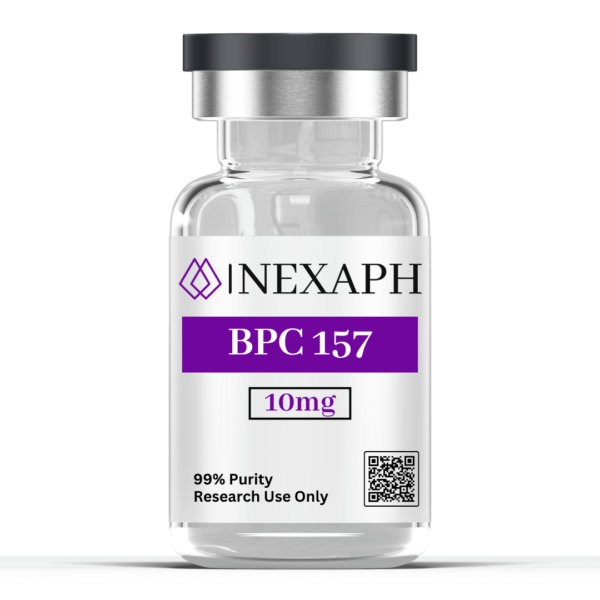
BPC 157 10mg (10 vials/Kit): Premier Regenerative Research Compound
In modern biochemical research, evaluating tissue signaling cascades requires peptide compounds that maintain absolute structural fidelity. Unlike many native biological peptides that undergo rapid enzymatic breakdown when exposed to systemic proteolytic enzymes, BPC 157 possesses inherent resistance to enzymatic cleavage due to its unique secondary structure and cyclic stability traits. When scientists explore models of tendon-to-bone healing, ligament repair, ulcerative colitis mitigation, or neuroprotection, the stability of the compound dictates the validity of the data. Sourcing BPC 157 10mg (10 vials/Kit) guarantees an ultra-pure, research-grade synthetic compound that yields clear, repeatable, and quantifiable analytical outcomes in both acute and long-term assay protocols.
Packaging plays an essential role in preserving peptide bioactivity. The BPC 157 10mg (10 vials/Kit) formulation is intentionally engineered to address the practical demands of busy academic and commercial research laboratories. By supplying a total of 100mg of lyophilized BPC 157 divided uniformly across ten separate 10mg USP Type I borosilicate glass vials, this multi-vial kit protects the integrity of your reagent supply. Individual vacuum-sealed vials allow research teams to reconstitute only the exact dosage required for immediate daily or weekly experimental runs. Unused vials remain securely sealed in cold storage, preventing atmospheric oxidation, room-temperature degradation, and moisture accumulation that can compromise bulk-packaged research chemicals.
Biological Mechanisms and Key Applications of BPC 157 10mg (10 vials/Kit)
The multifaceted biological activity of BPC 157 10mg (10 vials/Kit) centers on its interaction with primary cellular growth factor pathways and vascular remodeling mechanics. One of the most documented mechanisms of BPC 157 is its ability to upregulate VEGFR2 (vascular endothelial growth factor receptor 2) expression and stimulate the activation of the FAK-paxillin pathway. This cascade accelerates endothelial cell sprouting and capillary formation, a process known as angiogenesis. Through this enhanced microvascular formation, damaged tissues receive accelerated nutrient flow, oxygenation, and cellular turnover, making BPC 157 10mg (10 vials/Kit) an indispensable reagent for tissue engineering and healing research.
Beyond vascular dynamics, BPC 157 10mg (10 vials/Kit) directly modulates fibroblast proliferation and tendon outgrowth. Tendons and ligaments represent poorly vascularized dense connective tissues that normally heal at an extremely slow rate. Research demonstrates that BPC 157 increases the survival and migration of tenocytes, promoting collagen type I synthesis and structural cross-linking. Furthermore, BPC 157 displays pronounced cytoprotective properties across the gastrointestinal tract, interacting with nitric oxide (NO) synthesis pathways to preserve mucosal barrier integrity against chemical insults and oxidative injury.
-
Angiogenic Pathway Acceleration: Promotes VEGFR2 phosphorylation and capillary tubule formation in endothelial assays without inducing uncontrolled cell proliferation.
-
Tendon and Ligament Repair: Stimulates tenocyte migration, upregulates growth factor expression (such as bFGF and EGF), and increases structural collagen deposition in connective tissue models.
-
Gastrointestinal Cytoprotection: Counteracts mucosal lesions, inflammatory bowel markers, and tight junction breakdown by modulating the nitric oxide synthase (NOS) system.
-
Nitric Oxide Modulation: Balances endothelial (eNOS) and inducible (iNOS) nitric oxide production, protecting microvessels and stabilizing systemic vascular tone during organ stress models.
-
Neuroprotective Potential: Attenuates neuroinflammatory signaling and supports axonal outgrowth following mechanical injury or neurotoxic chemical exposure in neuronal culture models.
| Experimental Parameter | Technical Profile for BPC 157 10mg (10 vials/Kit) |
| Product Designation | BPC 157 10mg (10 vials/Kit) |
| Chemical Sequence | H-Gly-Glu-Pro-Pro-Pro-Gly-Lys-Pro-Ala-Asp-Asp-Ala-Gly-Leu-Val-OH |
| CAS Registry Number | 137525-51-0 |
| Molecular Formula | C₆₂H₉₈N₁₆O₂₂ |
| Molecular Weight | 1419.56 g/mol |
| Purity Standard | ≥99.0% (Verified via preparative HPLC analysis) |
| Formulation State | Sterile, freeze-dried lyophilized cake in USP Type I glass vials |
| Kit Configuration | 10 Vials per Kit (10mg BPC 157 per vial; 100mg total per kit) |
| Primary Research Fields | Angiogenesis, tendon/ligament regeneration, GI mucosal repair, neuroprotection |
The high degree of purity verified in every kit of BPC 157 10mg (10 vials/Kit) ensures that baseline experimental readings remain uncorrupted by synthesis fragments or salt residues. Whether conducting enzyme-linked immunosorbent assays (ELISA), Western blotting, or histological staining, utilizing high-grade BPC 157 ensures clear, unambiguous, and peer-review-ready laboratory results.
Laboratory Handling, Reconstitution, and Storage Protocols for BPC 157 10mg (10 vials/Kit)
Maintaining the long-term structural integrity of BPC 157 10mg (10 vials/Kit) requires strict adherence to standardized aseptic reconstitution and climate-controlled storage protocols. Peptides are sensitive macromolecules linked by peptide bonds that can undergo hydrolysis, oxidation, or secondary structure denaturing if subjected to shear stress, unbuffered pH shifts, or contamination. The following step-by-step procedures detail the standard operating protocol for handling BPC 157 10mg (10 vials/Kit) in scientific environments.
Prior to reconstitution, bring the lyophilized BPC 157 10mg (10 vials/Kit) vial to ambient room temperature inside a certified Class II Biosafety Cabinet or laminar flow hood. Sanitizing all glass surfaces, vial stoppers, and micro-pipettes with 70% isopropyl alcohol prevents airborne spore or bacterial contamination during solvent introduction.
-
Aseptic Septum Preparation: Remove the flip-off protective cap from the BPC 157 10mg (10 vials/Kit) vial. Thoroughly wipe the exposed synthetic rubber stopper with a sterile 70% isopropyl alcohol swab and allow it to dry completely.
-
Diluent Introduction: Using a sterile syringe equipped with a fine-gauge needle, draw the designated volume of Bacteriostatic Water (0.9% benzyl alcohol) or Sterile Normal Saline (0.9% NaCl). Insert the needle through the center of the stopper at a slight angle and direct the solvent stream down the inner glass wall. Avoid spraying liquid directly onto the lyophilized powder cake.
-
Gentle Dissolution: Allow the diluent to naturally saturate the freeze-dried matrix. Roll the vial between your palms or swirl gently in a smooth circular motion until liquid clarity is achieved. Do not vortex, shake, or agitate violently, as mechanical shearing forces introduce micro-bubbles and disrupt delicate secondary peptide folding.
-
Aliquot & Sub-Division: If the reconstituted solution is intended for use across multiple days, divide the liquid into small, sterile microcentrifuge tubes under aseptic conditions to prevent air-headspace oxidation and eliminate the need for repeated freeze-thaw steps.
| Operational Phase | Recommended Environmental Condition | Stability Duration |
| Unopened Lyophilized Kit | Freeze at -20°C to -80°C (Protected from light and moisture) | 24 to 36 Months |
| Short-Term Storage (Dry) | Refrigerate at 2°C to 8°C (Desiccant environment) | Up to 90 Days |
| Reconstituted Liquid Solution | Refrigerate at 2°C to 8°C (In Bacteriostatic Water) | Up to 30 Days |
| Frozen Liquid Aliquots | Deep Freeze at -20°C or colder (Single-use aliquots) | Up to 6 Months |
Analytical Quality Control & Certificate of Analysis (COA): Every batch of BPC 157 10mg (10 vials/Kit) is tested using analytical High-Performance Liquid Chromatography (HPLC) and Mass Spectrometry (MS). Batch-specific COA reports accompany each shipment, confirming precise molecular mass matching, target sequence identity, residual solvent removal, and an overall chemical purity exceeding ≥99.0%.
Strict Regulatory & Research Compliance Statement: BPC 157 10mg (10 vials/Kit) is manufactured, packaged, and distributed exclusively for in vitro scientific research, academic laboratory experimentation, chemical synthesis, and biochemical testing. BPC 157 10mg (10 vials/Kit) is strictly not intended, formulated, or cleared for human or animal consumption, therapeutic medical treatment, clinical diagnostic work, or cosmetic applications. All handling must be carried out by qualified researchers, scientific technicians, or academic staff adhering to institutional Biosafety Level (BSL) and OSHA workplace safety regulations.
Be the first to review “BPC 157 10mg (10 vials/Kit)”
Related products
Reviews
There are no reviews yet.