
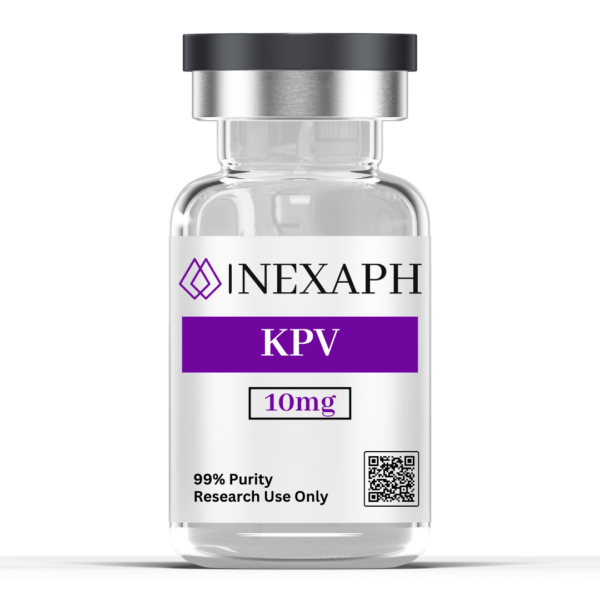
KPV 10mg (10 vials/kit): Ultra-Pure Anti-Inflammatory Tripeptide for Research
In modern immunological and gastroenterological research, controlling baseline variables and maintaining reagent stability are critical for generating publishable, peer-reviewed data. Natural endocrine signaling molecules often exhibit rapid enzymatic degradation and short biological half-lives when introduced to complex biological matrices. KPV overcomes these structural limitations due to its compact tripeptide architecture, which resists enzymatic cleavage by ubiquitous endopeptidases while maintaining high cell-membrane permeability. When researchers evaluate inflammatory cascades in epithelial monolayers, macrophage cultures, or animal models of colitis, utilizing high-grade KPV 10mg (10 vials/kit) guarantees consistent peptide concentration and reproducible experimental outcomes.
Packaging structure is an essential factor in protecting delicate synthetic peptides against atmospheric oxidation, moisture absorption, and thermal degradation. The KPV 10mg (10 vials/kit) configuration directly addresses these operational challenges by distributing 100mg of total high-purity bioactive material across ten separate 10mg USP Type I borosilicate glass vials. Freeze-dried under sterile vacuum conditions, each vial contains a uniform, highly stable lyophilized cake. This modular multi-vial system enables research staff to reconstitute only the exact volume required for immediate testing procedures, leaving the remaining stock in complete molecular stasis under frozen storage and avoiding the structural loss caused by repeated freeze-thaw cycles.
Anti-Inflammatory Mechanisms, NF-kB Suppression, and Quality Standards of KPV 10mg (10 vials/kit)
The primary biochemical interest in KPV 10mg (10 vials/kit) stems from its intracellular capacity to downregulate Nuclear Factor kappa B (NF-$\kappa$B)—the master transcriptional regulator of systemic inflammation. Upon entering target cells via passive diffusion or transporter-mediated uptake, KPV translocates into the cytoplasm and cell nucleus, where it directly interacts with the p65 and p50 subunits of the NF-$\kappa$B complex or inhibits I$\kappa$B kinase (IKK) activation. By preventing NF-$\kappa$B from binding to nuclear promoter sites, KPV markedly suppresses the gene expression and transcription of key pro-inflammatory cytokines, including Tumor Necrosis Factor-alpha (TNF-$\alpha$), Interleukin-1 beta (IL-1$\beta$), Interleukin-6 (IL-6), and Interleukin-8 (IL-8).
In addition to its anti-inflammatory effects, KPV 10mg (10 vials/kit) exhibits broad-spectrum antimicrobial and antifungal characteristics against opportunistic pathogens, such as Staphylococcus aureus and Candida albicans. Research demonstrates that KPV disrupts microbial cell membrane potential and inhibits hyphal formation without relying on traditional antibiotic pathways, making it an attractive candidate for investigating multi-drug resistant infection models and topical antimicrobial formulations.
-
Targeted NF-$\kappa$B Pathway Suppression: Directly inhibits nuclear translocation of NF-$\kappa$B transcription factors, blocking the synthesis of downstream inflammatory mediators without suppressing overall host immune surveillance.
-
Gut Mucosal Barrier Protection: Restores tight-junction protein expression (such as ZO-1 and Occludin) in intestinal epithelial cells, making it a primary research tool for inflammatory bowel disease (IBD), Crohn’s disease, and ulcerative colitis models.
-
Mast Cell Stabilization & Histamine Modulation: Inhibits mast cell degranulation and reduces histamine and leukotriene release, enabling advanced research into allergic response, dermatitis, and mast cell activation syndrome (MCAS).
-
Broad-Spectrum Antimicrobial Activity: Exhibits intrinsic fungicidal and bactericidal properties by disrupting pathogen cell membrane integrity and inhibiting biofilm formation.
-
Ultra-High Chemical Purity ($\ge$99.0%): Synthesized via automated Solid-Phase Peptide Synthesis (SPPS) and purified using preparative High-Performance Liquid Chromatography (HPLC) to guarantee the removal of sequence truncations and synthesis contaminants.
| Biochemical / Analytical Parameter | Technical Profile for KPV 10mg (10 vials/kit) |
| Product Identifier | KPV 10mg (10 vials/kit) |
| Chemical Sequence | H-Lys-Pro-Val-OH (Lysine-Proline-Valine) |
| CAS Registry Number | 67727-92-6 |
| Molecular Formula | C₁₆H₃₁N₄O₄ |
| Molecular Mass | Approximately 341.45 g/mol |
| Chemical Purity | $\ge$99.0% (Verified by analytical HPLC peak integration) |
| Physical Appearance | White to off-white, sterile lyophilized powder cake |
| Package Configuration | 10 USP Type I Borosilicate Glass Vials per Kit (10mg KPV per vial) |
| Primary Research Domains | NF-$\kappa$B signaling, IBD/mucosal repair, mast cell stabilization, antimicrobial kinetics |
Every production batch of KPV 10mg (10 vials/kit) undergoes multi-tiered laboratory verification. Electrospray Ionization Mass Spectrometry (ESI-MS) confirms exact molecular mass matching against theoretical values, ensuring that researchers receive a pure, uniform tripeptide free from amino acid substitution errors or incomplete sequence fragments.
Reconstitution Guidelines, Laboratory Storage, and Quality Protocols for KPV 10mg (10 vials/kit)
Achieving reproducible, publication-grade results when working with KPV 10mg (10 vials/kit) requires strict adherence to aseptic laboratory reconstitution and temperature-controlled storage standards. Tripeptides possess amide bonds and functional side chains that can undergo hydrolysis or oxidative degradation if exposed to improper solvent pH, ambient light, or high mechanical shear stress. The following procedures detail the standard operating methodology for preparing and preserving KPV 10mg (10 vials/kit) in scientific settings.
Prior to reconstitution, bring the lyophilized KPV 10mg (10 vials/kit) vial to ambient room temperature inside a certified Class II Biosafety Cabinet or laminar flow hood. Sanitizing all glass surfaces, vial stoppers, and micro-pipettes with 70% isopropyl alcohol prevents airborne spore or bacterial contamination during solvent introduction.
-
Aseptic Stopper Preparation: Remove the protective flip-off cap from the KPV 10mg (10 vials/kit) vial. Thoroughly swab the synthetic rubber stopper with a fresh 70% isopropyl alcohol wipe and allow it to air-dry completely.
-
Diluent Introduction: Utilizing a sterile syringe equipped with a fine-gauge needle, draw the calculated volume of Bacteriostatic Water (0.9% benzyl alcohol), Sterile Normal Saline (0.9% NaCl), or Phosphate-Buffered Saline (PBS, pH 7.4). Slowly insert the needle through the center of the rubber stopper at a 45-degree angle and direct the liquid stream down the inner glass wall of the vial. Do not spray diluent directly onto the lyophilized cake.
-
Gentle Dissolution: Allow the diluent to naturally soak into and dissolve the powder cake. Gently roll the vial between your palms or swirl in a slow, circular motion until the liquid becomes completely clear and colorless. Never vortex, shake, or invert violently, as mechanical agitation can introduce unwanted air bubbles and promote structural shearing.
-
Aliquot Distribution: For studies requiring multiple sampling points over extended timelines, divide the reconstituted KPV 10mg (10 vials/kit) solution into small, sterile microcentrifuge tubes under aseptic conditions. This practice prevents headspace oxidation and eliminates the necessity of repeated freeze-thaw cycles.
| Operational Phase | Recommended Environmental Condition | Stability Duration |
| Unopened Lyophilized Kit | Freeze at -20°C to -80°C (Protected from light and atmospheric moisture) | 24 to 36 Months |
| Dry Short-Term Storage | Refrigerate at 2°C to 8°C (Desiccant container) | Up to 90 Days |
| Reconstituted Solution | Refrigerate at 2°C to 8°C (In Bacteriostatic Water or PBS) | Up to 28–30 Days |
| Frozen Liquid Aliquots | Deep Freeze at -20°C or colder (Single-use micro-aliquots) | Up to 6 Months |
Batch Traceability & Analytical Documentation: Every shipment of KPV 10mg (10 vials/kit) is accompanied by a batch-specific Certificate of Analysis (COA) displaying high-resolution analytical HPLC chromatograms, mass spectrometry sequence verification, heavy metal screening, residual solvent limits, and endotoxin analysis. These verifiable standards guarantee full alignment with institutional review board (IRB) requirements and scientific publishing criteria.
Strict Regulatory & Research Compliance Statement: KPV 10mg (10 vials/kit) is manufactured, packaged, and distributed exclusively for in vitro scientific research, academic laboratory experimentation, chemical synthesis, and biochemical testing. KPV 10mg (10 vials/kit) is strictly not intended, formulated, or cleared for human or animal consumption, therapeutic medical treatment, clinical diagnostic work, or cosmetic applications. All handling must be conducted by certified researchers, scientific technicians, or academic staff adhering to institutional Biosafety Level (BSL) and OSHA workplace safety regulations.
Be the first to review “KPV 10mg (10 vials/kit)”
Related products
Peptide
Reviews
There are no reviews yet.