
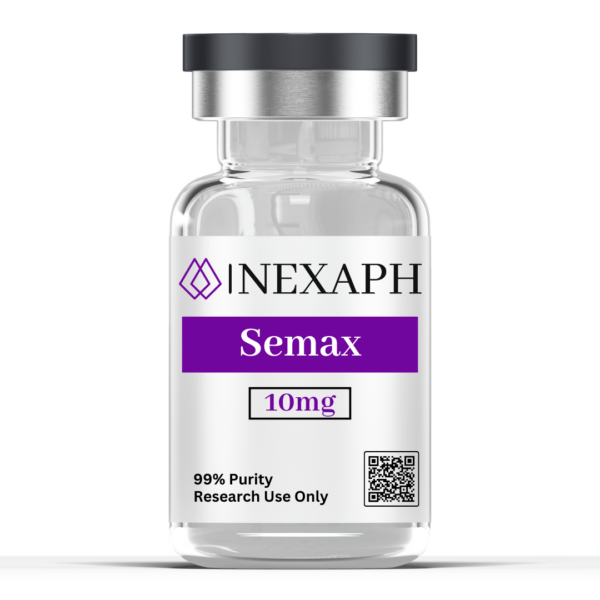
N-Acetyl Semax Amidate 10mg: Enhanced Neurotrophic & Nootropic Heptapeptide for Research
In neurobiological research, standard peptide sequences often suffer from rapid enzymatic degradation caused by circulating aminopeptidases and carboxypeptidases, leading to brief biological half-lives and limited blood-brain barrier (BBB) permeability. The dual chemical modification of N-Acetyl Semax Amidate 10mg directly resolves these pharmacokinetic limitations. N-terminal acetylation protects the peptide against aminopeptidase cleavage, while C-terminal amidation blocks carboxypeptidase degradation and removes the negative charge from the carboxylic acid tail. This increase in lipophilicity enables the peptide to cross the blood-brain barrier efficiently, delivering prolonged bioactivity and consistent receptor engagement in CNS bioassays.
Maintaining exact peptide mass and strict chemical purity is vital when measuring subtle changes in neurotrophin synthesis and gene expression. N-Acetyl Semax Amidate 10mg is synthesized using automated Solid-Phase Peptide Synthesis (SPPS) and purified via High-Performance Liquid Chromatography (HPLC) to achieve a purity threshold of $\ge$99.0%. Freeze-dried under sterile vacuum conditions inside USP Type I borosilicate glass vials, each 10mg lyophilized cake maintains molecular stasis, ensuring high batch-to-batch reproducibility across longitudinal neural cell culture and animal behavioral studies.
Neurotrophic Mechanisms, BDNF/NGF Upregulation, and Quality Standards of N-Acetyl Semax Amidate 10mg
The primary mechanism of action driving interest in N-Acetyl Semax Amidate 10mg is its profound ability to stimulate endogenous neurotrophin synthesis within the central nervous system. Upon crossing cell membranes and entering neural tissue, N-Acetyl Semax Amidate rapidly upregulates the gene expression and secretion of Brain-Derived Neurotrophic Factor (BDNF) and Nerve Growth Factor (NGF), as well as their high-affinity receptors, Tropomyosin receptor kinase B (TrkB) and Tropomyosin receptor kinase A (TrkA), in the hippocampus and prefrontal cortex.
Beyond neurotrophin regulation, N-Acetyl Semax Amidate 10mg modulates central neurotransmitter turnover and inflammatory cascades:
-
Dopaminergic & Serotonergic Regulation: Selectively modulates dopamine and serotonin turnover rates in the striatum and basal forebrain, supporting research into executive function, attention, working memory, and motivation without inducing central nervous system over-stimulation or rebound depletion.
-
Melanocortin Receptor Signaling: Interacts with melanocortin MC4 and MC5 receptors, driving intracellular signaling pathways that attenuate neuroinflammation, inhibit glial scar formation, and protect cerebral microvasculature.
-
Neuroprotection Against Hypoxia & Ischemia: Reduces expression of pro-inflammatory cytokines, such as Interleukin-6 (IL-6) and Tumor Necrosis Factor-alpha (TNF-$\alpha$), while preserving mitochondrial function and preventing excitotoxic cell death in neuronal hypoxia models.
-
Superior Blood-Brain Barrier (BBB) Permeability: Dual N-acetyl and C-amidate capping increases lipophilicity, allowing significantly higher CNS tissue accumulation compared to unmodified Semax.
-
Extended Biological Half-Life: Resists degradation by proteolytic enzymes in plasma and tissue matrices, maintaining active signaling over extended experimental observation windows.
| Biochemical / Analytical Parameter | Technical Profile for N-Acetyl Semax Amidate 10mg |
| Product Identifier | N-Acetyl Semax Amidate 10mg |
| Chemical Sequence | $Ac\text{-}Met\text{-}Glu\text{-}His\text{-}Phe\text{-}Pro\text{-}Gly\text{-}Pro\text{-}NH_2$ |
| CAS Registry Number | 1000309-82-0 (Derivative classification) |
| Molecular Formula | C₃₉H₅₄N₁₀O₁₀S |
| Molecular Mass | Approximately 854.98 g/mol |
| Chemical Purity | $\ge$99.0% (Verified by analytical HPLC peak integration) |
| Physical Appearance | White to off-white sterile lyophilized powder cake |
| Container Specification | USP Type I Borosilicate Glass Vial with Flip-Off Seal |
| Primary Research Domains | BDNF/NGF gene expression, synaptogenesis, neuroprotection, memory consolidation |
Reconstitution Guidelines, Laboratory Storage, and Quality Protocols for N-Acetyl Semax Amidate 10mg
Achieving reliable, publication-grade experimental results requires strict adherence to aseptic handling and temperature-controlled storage standards when reconstituting N-Acetyl Semax Amidate 10mg. Peptides with methionine residues are sensitive to atmospheric oxidation, while amide bonds can undergo hydrolysis if subjected to improper solvent pH or excessive thermal fluctuations.
Perform all reconstitution procedures inside a certified Class II Biosafety Cabinet:
-
Thermal Equilibrium: Allow the frozen N-Acetyl Semax Amidate 10mg vial to adjust to ambient room temperature prior to solvent introduction to prevent water condensation on the inner glass walls.
-
Septum Sanitization: Remove the protective flip-off cap and swab the synthetic rubber stopper with a fresh 70% isopropyl alcohol wipe. Allow the surface to dry completely.
-
Aseptic Diluent Introduction: Using a sterile syringe with a fine-gauge needle, draw the required volume of Bacteriostatic Water (0.9% benzyl alcohol), Sterile Normal Saline (0.9% NaCl), or Sterile Deionized Water for in vitro testing. Direct the needle at a 45-degree angle against the inner glass wall so the liquid flows smoothly over the lyophilized cake.
-
Gentle Dissolution: Allow the solvent to hydrate the powder cake naturally for 2 minutes. Gently swirl the vial in circular motions until the solution is completely clear and colorless. Do not shake or vortex vigorously, as mechanical shear stress can disrupt peptide tertiary structure and introduce air bubbles.
-
Sub-Aliquoting Strategy: For protocols requiring multiple testing time points, divide the reconstituted solution into sterile, single-use microcentrifuge tubes. Store aliquots frozen to eliminate degradation caused by repeated freeze-thaw cycles.
| Operational Phase | Recommended Environmental Condition | Bioactive Stability Duration |
| Unopened Lyophilized Vial | Freeze at -20°C to -80°C (Protected from light and moisture) | 24 to 36 Months |
| Unopened Short-Term Storage | Refrigerated at 2°C to 8°C (Sealed container) | Up to 90 Days |
| Reconstituted Solution | Refrigerated at 2°C to 8°C (In Bacteriostatic Water or Saline) | Up to 21–28 Days |
| Frozen Liquid Aliquots | Deep Freeze at -20°C or colder (Single freeze-thaw cycle max) | Up to 6 Months |
Batch Traceability & Quality Verification: Every batch of N-Acetyl Semax Amidate 10mg is subjected to third-party analytical validation. High-Performance Liquid Chromatography (HPLC) verifies purity above 99.0%, while Electrospray Ionization Mass Spectrometry (ESI-MS) confirms precise molecular weight matching theoretical values. Each order includes a batch-specific Certificate of Analysis (COA) documenting chemical purity, residual solvent analysis, heavy metal screening, and bacterial endotoxin levels (<0.05 EU/mg) to meet institutional review standards.
Strict Regulatory & Research Compliance Statement: N-Acetyl Semax Amidate 10mg is produced, packaged, and distributed exclusively for in vitro laboratory research, scientific experimentation, cellular bioassays, and preclinical research. N-Acetyl Semax Amidate 10mg is strictly not intended, formulated, or approved for human or animal consumption, therapeutic medical treatment, clinical diagnostic work, or cosmetic applications. All handling must be conducted by certified researchers or scientific personnel operating within equipped laboratory facilities in compliance with OSHA safety standards and institutional biosafety protocols.
Be the first to review “N-Acetyl Semax Amidate 10mg (10 vials/kit)”
Related products
Peptide
Reviews
There are no reviews yet.